Mark
Why You Need To Use CamelCase in Naming
Flublok
FLUBLOK
FluBlok
Which of the above is the best formatting for a flu vaccine name?
Sanofi went with Flublok. I think that can read as “Flub-lok” and sound like you have locked in a deliberate flub (ironic, eh?).
A far better choice would have been using CamelCase: FluBlok. There would be no possible confusion.
CamelCase is the intentional use of capital letters to signify a break in a name. That break identifies the separate segments of the name and ensures proper communication.
Yes, to some, CamelCase (or internal capitalization or Bicapitalization) is a relic of the 70’s tech scene (e.g., CompuServ, VisiCalc, WordPerfect). But it is still in use by some of the world’s most powerful brands (e.g., iPhone, PayPal, YouTube). Why? Simply because it works. When you use CamelCase, you ensure proper communication of the brand intent.
Don’t flub this one!

Stanley Kubrick – Thoughts on Storytelling

Photo by Rain Bennett on Unsplash
Stanley Kubrick made a great point about indirect storytelling that gets to an important tenet of naming (emphasis is mine):
“If you really want to communicate something, even if it’s just an emotion or an attitude, let alone an idea, the least effective and least enjoyable way is directly. It only goes in about an inch. But if you can get people to the point where they have to think a moment what it is you’re getting at, and then discover it, the thrill of discovery goes right through the heart.”
I’m a strong advocate for ambiguous names that make people think. When you use an ambiguous or unexpected name, you create a “mind puzzle” with your branding that requires the customer to think about the connection to your product and will spend time trying to figure out why the name was chosen. This can lead to higher recall of the name later and positive attributions to the product. If you use a slightly ambiguous name, the consumer might actually enjoy the “mind puzzle” and won’t have to work too hard to get your point. When consumers solve the puzzle, they will then have a sense of accomplishment because they were able to figure it out. And as Kubrick says, that thrill of discovery “…goes right through the heart.”
Generic or descriptive names are direct names that are not distinctive. Yes, calling your food chopper “FastChop” might be a way to suggest the functional benefit of your product. But a generic or descriptive name will only “go an inch deep” as the Kubrick quote infers.
Here is a good example of an ambiguous name that requires some thought. There is a burger place in the Philippines called “Regrub.” This place has been very successful, and they are now very famous in the Philippines. A good part of their awareness comes from the fact that their name has a lot of people thinking, “Why Regrub?” After they ponder for a while, they then realize that it is the word “Burger” spelled backwards. They then go on to tell their friends about the new place with the unique name which helps to build the success story. The “thrill of discovery” built into the name causes superior communication and memorability.
Here is an example of a tech company that entered a world with competitive names such as IBM, DEC and Cincom. Instead of just another cold, technical name, Steve Jobs and Steve Wozniak decided on Apple Computers. Reportedly, Jobs and Wozniak considered alternate brand names such as Executex and Matrix Electronics but settled on Apple. In Steve Jobs’ biography, Jobs said he suggested Apple Computers because he thought the name sounded “fun, spirited, and not intimidating.” Apple sounds simple and straightforward as compared to those other choices, and it made people think about the concept behind the name: a simple, accessible and affordable computer.
The next time you have a naming challenge, don’t lean towards generic or descriptive names. Instead, go for a higher-level name that makes people think and enables you to stand out from your competitors. You should have an easier time getting a trademark (compared to generic or descriptive names), and you will also benefit from having a unique positioning for your marketing efforts.
How to Name Your Startup in 8 Simple Steps
A complete guide to the DIY name generation process
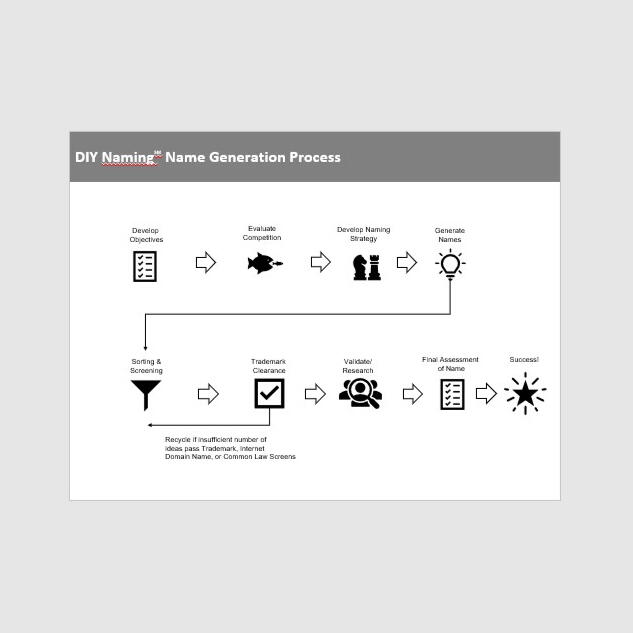
This article provides a process you can use to name your business, product, or service. There are 8 simple steps and if you do the work that is required, you can develop a great name very quickly.
Step 1: Develop Objectives
Most people who start a business have a single-minded objective for naming => Develop A Great Name. But what does that mean? The reason you develop naming objectives before you start to brainstorm is to decide what you want the name to do for you and to provide criteria for evaluating names.
When developing the objectives for your naming project, you should consider the following questions:
- What does the future look like and what role will your company play in it?
- What is the current and future competitive set and how do you want to differentiate from the competition?
- How do you want your customer to feel after hearing/reading your name?
- What are the unique attributes of your company/product/service and how do you want your name to reflect that uniqueness?
- How will your business expand in the future and how can your name flex to fit that future?
- Can your name project a certain image or personality?
- How will I know when I have identified a great name?
Your naming objectives might be as simple as: “We have a groundbreaking product that will revolutionize the ABC industry, so we want a name that stands apart from the competition and evokes the future that we imagine. The name must be easy to pronounce, read and spell, and be memorable. Most importantly, the name must convey the benefits that our product delivers and must give our target customers the belief that we are the new market leader.”
But wait! Don’t write down your objectives in ink just yet. Do the next step to help you understand how to stand out versus the competition.
Step 2: Evaluate Competition
Here is a visual way to demonstrate why the competitive set is so important to consider. In the three groups of circles shown below, the circle in the center is always the same size. However, as you can see, the center circle looks smaller or larger based upon the size of the other circles surrounding it. The group of circles on the right has six similarly sized circles, and you can see how it is impossible to distinguish one from another. It is far better to be the outlier, such as the center circle in the first two groups of circles.

Don’t be like the group of circles on the right. Make sure you develop a name that ensures you will stand out versus the competition!
One way to do that is to consider the type of name you wish to develop. Start by listing all the companies that you consider to be competitors. You should have a list of at least 8–10 companies. And please don’t say “I have no competition.” Everyone has competition. If you think about your company’s product or service and think of possible substitutions for them (even if you consider them to be inferior), then you will easily generate names of competitors. If you are in doubt, visit Amazon or Google and enter your product into the search bar. You will find your competitors.
The next step is to assess the names of the competitors and place them into the spectrum as shown below.
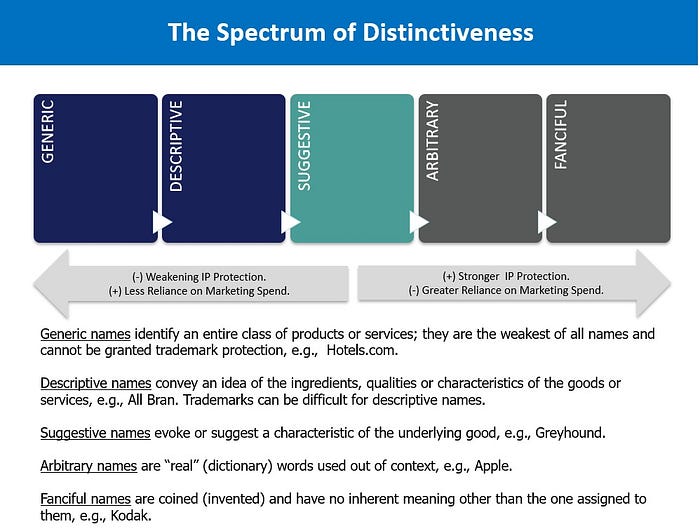
Once you understand where your competitors are, you can formulate your own strategy for standing out. For example, if the competitive set for your food chopping device consists of products with descriptive names like EZ Chop, Speed Chop, QuickChop, or TurboChop, don’t call your product FastChop because you will get lost in the field of sameness at the shelf. In this case, you should avoid descriptive names altogether.
In the example I provided earlier, you might want to modify the objective to mandate development of a fanciful name as those are often considered to be cutting edge or high tech. The revised Naming Objectives might be: “We have a groundbreaking product that will revolutionize the ABC industry, so we want a fanciful or invented name that stands apart from the competition and evokes the future that we imagine. The name must be easy to pronounce, read and spell, and be memorable. Most importantly, the name must convey the benefits that our product delivers and must give our target customers the belief that we are the new market leader.”
Step 3: Naming Strategy
Never start a name development project without a solid strategy. You need to have a strategic positioning that provides a solid foundation for your branding and marketing efforts. The entire marketing strategy can be summarized in one statement that is called a Brand Positioning Statement.
There are five components to a positioning statement:
- Target Audience — A demographic and attitudinal description of the core prospect to whom the brand is intended to appeal.
- Frame of Reference — The category in which the brand competes.
- Point of Difference — The most compelling and motivating benefit that the brand can own in the hearts and minds of its target audience relative to the competition.
- Reason to Believe — The most convincing proof that the brand delivers what it promises.
- Personality — The tonality of your brand expression.
Positioning Statement Format:
For (target audience), (brand name) is the (frame of reference) that delivers (point of difference) because only (brand name) is (reason to believe). We will express this positioning as (personality).
Once you nail this positioning statement, you will fully set the guidelines for development of your name.
Step 4: Generate Names
Now for the fun part!
You probably already have a list of names, so now you are looking at how to expand the list. I suggest you do that by starting with keywords. Begin by compiling a very comprehensive list of keywords for your company, product, or service. Keywords include:
- Search Terms — What do people use when they search for you?
- User Terminology — What do people say when they talk about you?
- Common Reference Terms — Category reference terms.
- Product Benefits — What does your product offer?
- Synonyms — Identify words that mean the same as another keyword.
- Desirable Attributes — What do you want to be to your target?
This list gets used with several of the later steps, so continue adding words until you feel completely stuck. Shoot for 50+ keywords on your list.
Once you have a broad and deep list of keywords, you can begin creating names from these keywords. For example, if you have a list of product benefits as keywords, you might try to convert one of them to a name as we did when naming this product:
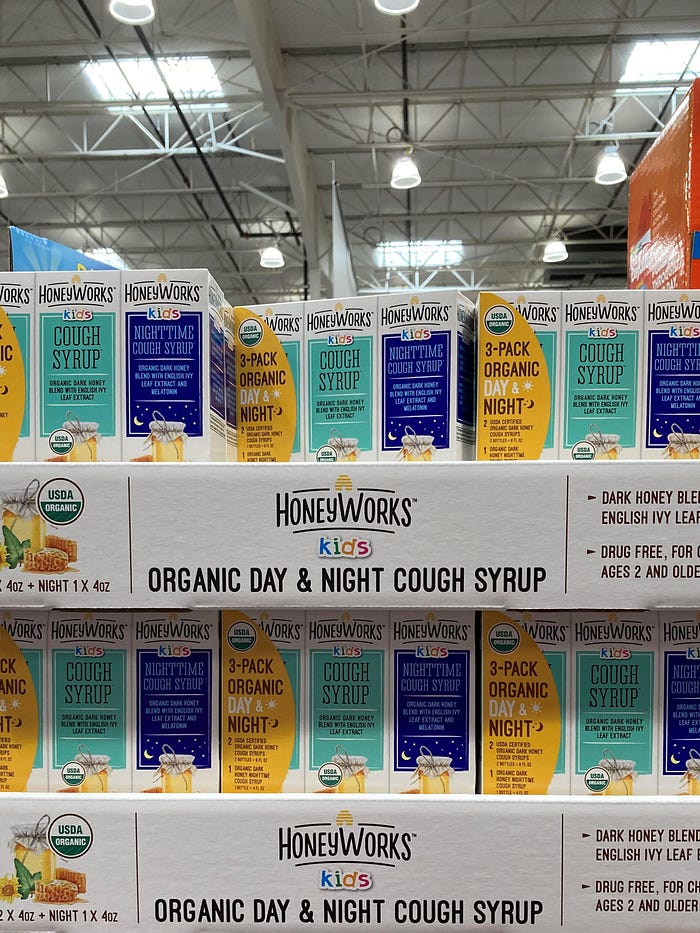
This cough syrup is honey-based and it is effective in soothing coughs, so HoneyWorksTM was a great name!
Finally, I often get asked about using AI to generate names. If, and only if, you have done the strategic work upfront, AI can be a useful tool because you can pinpoint the areas for AI to focus on when generating names. But if you don’t do the strategic work first, you will be overwhelmed with names and have no clue how to pick good names from the bunch. The analogy I use is trying to drink from a fire hose…AI will crush you with names, and without strategic focus, will flood your brain with irrelevant options.
Step 5: Sorting and Screening
At this point you should have 100+ name candidates. Quantity will drive quality, as the number of good names you generate increases as you generate more names. When companies hire NameFlashSM for a naming project, we often generate thousands of names! But realistically you cannot run trademark checks on thousands of names (unless you are a bored trademark attorney). So you have to reduce your list of names to a more reasonable number to proceed to trademark clearance. Cut your list down to 15–20 names.
One obvious way to do that is to check the names against your naming objectives and strategic positioning. Toss out names that do not meet the criteria you’ve established.
I like to organize a large list of names by creating an affinity diagram. This enables you to group similar names together into clusters. This will enable you to review the clusters and pick the strongest names in each cluster for further analysis.
Step 6: Trademark Clearance
The greatest mistake you could make would be to choose a name that conflicts with another trademark that is in use, because that trademark owner will send you a “cease and desist” letter that either results in an expensive lawsuit or an abandonment of the name by you. Either one is extremely expensive and time consuming.
A business needs to conduct a trademark search before investing time and money into a new brand. Although no search can reveal every possible conflict that may exist with a trademark, a proper search can steer you clear of any big problems. You can do your own trademark search using the United States Patent and Trademark Office. The TESS trademark search process is not the easiest process to use, but if you follow the instructions on the website you should be able to figure it out.
If you want to get a lawyer involved, you’ll pay more. Some trademark attorneys will do a knockout search for you for $50 to $100 per name. But a comprehensive trademark search using a trademark attorney will be a lot more.
My advice on trademark conflicts is to eliminate the obvious conflicts with a 3-step process:
- Conduct a search using the TESS search vehicle at the USPTO.
- Do a Google search for your name.
- Try to buy the www.yourname.com domain at GoDaddy.
If these 3 steps do not show any conflicts, then the odds of a serious trademark conflict are minimal.
Step 7: Validate Your Choice
At this point you should have a short list (3–5 names) of leading candidates.
Before you choose a name, you need to validate the name. And by “validate” I do not mean to ask your partner or friends what they think. In fact, any person you are friends with or are related to do not get a vote. Why? Because these people will have a built in “positive bias” to anything you suggest and will not provide honest and objective feedback. If your name is bad, they won’t tell you so because they don’t want to hurt your feelings.
The best way to validate your name is to ask your target audience what they think. Big companies would commission a several thousand-dollar market research study to accomplish this task. You can do this for a fraction of the cost by using a cost-effective research tool like 1Q (https://site.1q.com/). Simply ask the following question using your final name selections, and you can get results for as little as $1 per question per respondent:
We’ve created a new toilet bowl plunger that does a better job of clearing the blockage. What should we call it?
- FastFlush
- Magic Plunger
- Perfect Plunge
- MegaPlunger
- Plungeriffic
You can spend $100 and get a good understanding of which names rise to the top from 100 members of your target audience.
Step 8: Final Assessment of Name
This one is easy! Simply use the Name Evaluation Tool to score the name you have chosen.
Hopefully you’ve developed a winning name! If you need further assistance, feel free to reach me at www.NameFlash.com!
When Visual Signals Don’t Align With Meaning
Thanks to the Canadian wildfires, my home, Pittsburgh, PA, resembles the home of Star Wars hero Luke Skywalker, Tatooine (except we only have one sun).

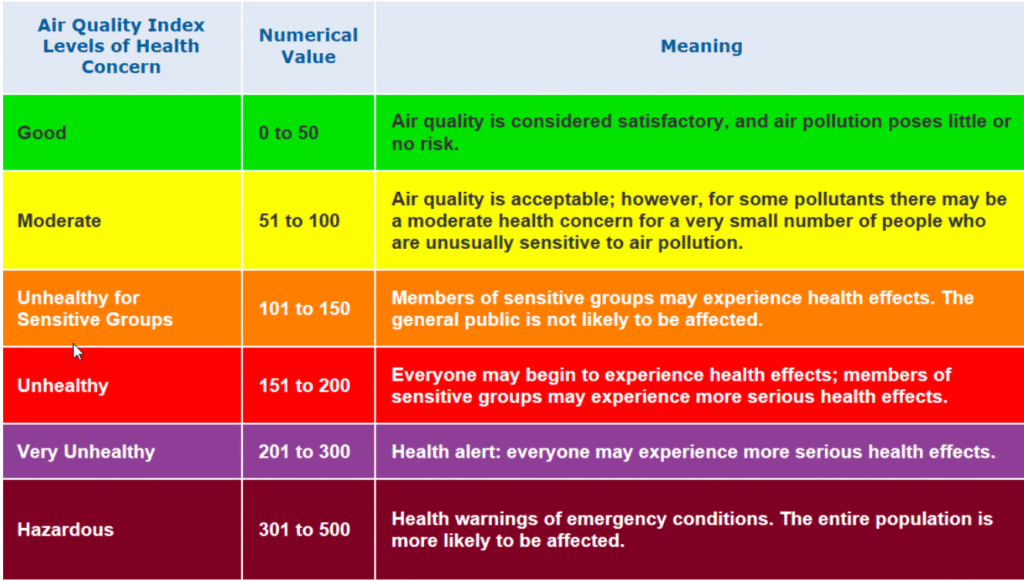
Yesterday, the Air Quality Index Level went from Orange to Red. Today it went up to Purple and then Maroon. And I knew it was getting worse, but when it went past Red into Purple and Maroon, I was not sure if that meant it was getting worse or better. I had to ask Google and here is what I found.
Source: Camfil
I think the Green/Yellow/Orange/Red is quite logical and follows the general concept of a stop light. But Red means Stop. Shouldn’t the alert level that means PEAK EMERGENCY – DON’T GO OUTSIDE be Red and not Maroon?
Maybe I’m too influenced by my age and experience. As a Boomer, when I think of Purple and Maroon, I think of Prince and flower children of the ‘60’s. That does not inspire the same level of concern as this air quality index color seems to provide.
Consider the colors of the rainbow. Red is the peak and purple is the lowest end of the spectrum. How did purple and maroon become the peak levels of air quality concern?
In communications, we need to align visual signals with desired meaning!
Why Love Is One of Branding’s Most Powerful Signals

LOVE
(Red Outside Violet Inside)
Photo: Courtesy of the San Francisco Museum of Modern Art, California; Artwork: © Morgan Art Foundation Ltd./Artists Rights Society (ARS), NY
Brands spend millions trying to win attention and trust. One of the most effective shortcuts may be surprisingly simple: love. In marketing, words and symbols associated with love can make people more receptive, more generous, and more likely to act.
Some brands have known this for years. Southwest leans into it with its “LUV” ticker and heart-forward branding. Subaru has built campaigns around love as part of its identity. That is not accidental — it reflects a deeper psychological response.

Research shows that simply prompting people to think about love can increase helpful behavior. For example, charitable appeals using the language of love drive significantly more giving than neutral messaging. Even visual cues matter as heart-shaped design elements have been linked to higher tipping and warmer responses. Diners whose bills arrived under a heart-shaped plate left tips that were 17% higher than those whose checks came under a round plate, and 15% higher than those whose checks came under a square plate.
Why does this work? Part of the answer may be the love symbolism often triggers release of oxytocin — a chemical often linked to trust, empathy, and connection. When branding delivers those feelings, it can strengthen how people relate to a product, a message, or a cause.
The takeaway for marketers is clear: love is not just a sentiment — it is a signal. Used thoughtfully, it can make brands feel more human, more trustworthy, and more persuasive.
(Don’t) Fill In The Blanks For A Better Name

Photo by Markus Winkler on Unsplash
Want to create a memorable name for your company, product or service? Use the “fill in” technique, which makes your customer’s brain work (and thereby leads to greater memorability).
Here is a great example of how the “filling in” process works. Quickly read the paragraph below:
It deosn’t mttaer in waht oredr all the ltteers in a wrod are. You can stlil raed it wouthit a porbelm bcuseae the huamn mnid wroks by a porecss of ptatern rceigontion. It dtemrines maennig bfoere porecssnig dteails.
Isn’t tihs amzanig? Your brain can make sense of even the most chaotic situation.
The science behind the brain’s “filling in” process is fascinating (read this Discover magazine article, especially the section near the end on blindsight: https://www.discovermagazine.com/mind/the-vision-thing-mainly-in-the-brain). The sub-headline of the article says it all: “The eye and brain work in a partnership to interpret conflicting signals from the outside world. Ultimately, we see whatever our brains think we should.”
This “filling in” process has been shown in numerous studies to be important to generating lasting recall and favorable persuasion. If the person’s brain is engaged and filling in the gaps, then the person will remember the experience and most likely be favorable towards it.
Why does the brain do this? Carnegie-Mellon University professor George Loewenstein coined the term “curiosity gap” to describe the gap between what we know and what we want to know. When people notice a gap in their knowledge, they feel deprived, so they work hard to find the missing pieces of information to complete their knowledge.
Let’s say you want to name a new product (or it could be a service or a company or something else). A “fill-in” name for this product would give the consumer enough information about the product so that the consumer’s brain is engaged and starts to fill in the missing information.
In their article The Mind of the Puzzler psychologists Sternberg and Davidson argued that solving puzzles entails the ability to compare hidden information in a puzzle with information already in memory. More importantly, in order to solve a puzzle, the brain must combine the two types of information to form novel ideas. The thinking involved in solving a puzzle is identical to what your target customer would utilize when faced with a “naming puzzle.” When the brain successfully identifies the pattern or twist that the name entails, you will typically get an “Aha! Effect” which leads to a solid brand connection.
A great brand name will provide some sense of perspective to the target customer and the product itself, but it won’t provide the whole story. If you leave enough to the imagination that your brain gets engaged in the product/name combination and makes you curious about a product and willing to investigate it further, then your brain will fill in the blank!
How Anchoring Shapes Brand Names and Perception
“Anchors aweigh, my boys, anchors aweigh.”

Photo by Simon Abrams on Unsplash
The famous line from the fight song of the United States Naval Academy refers to a simple nautical moment: when a ship’s anchor is lifted from the ocean floor and the vessel officially gets underway.
But here’s the interesting thing about anchors. Even when they’re lifted, they’re never left behind. The ship keeps the anchor onboard for the next port.
Brand names work much the same way.
Once an idea, perception, or association attaches itself to a brand, it tends to stick. That mental “anchor” can influence how people perceive value, quality, and meaning—sometimes for decades.
Understanding anchoring can help you build stronger brands and avoid naming decisions that might weigh you down later.
What Is Anchoring?
In psychology and behavioral economics, anchoring refers to the tendency for people to rely heavily on the first piece of information they encounter when making decisions.
That initial reference point—whether it’s a price, description, or name—shapes everything that follows.
Once the anchor is set, it becomes difficult to ignore.
Brands use this effect constantly.
Consider luxury goods. A handbag from Louis Vuitton might cost over $1,200, while a perfectly functional bag from Target sells for under $50. The difference isn’t just materials, it’s perception. The luxury brand establishes a powerful anchor of prestige, craftsmanship, and exclusivity.
The same effect appears with packaging. The iconic blue box from Tiffany & Co. immediately signals luxury and desirability before you even see what’s inside.
The anchor is already set.
Anchoring at Work in Pricing
Retailers also use anchoring to shape how customers interpret value.
For example, Costco once offered a massive 10-carat canary diamond ring with an appraised value of $264,765 for about $180,000. The dramatic price created a powerful reference point.
After seeing that number, suddenly a 1.3-carat ring priced around $1,800 feels like a bargain—even though, without that anchor, it might seem expensive.
The high-end product sets the benchmark that reframes everything else.
The Science Behind Anchoring
Anchoring isn’t just marketing theory. It has been demonstrated repeatedly in scientific studies.
In one famous experiment, researchers asked participants to write down the last two digits of their Social Security number before bidding on items such as wine, books, and electronics.
The numbers were random and unrelated to the products.
Yet participants with higher numbers (for example, 80–99) consistently placed higher bids than those with lower numbers (00–19). Most participants insisted the numbers had no influence on their bids.
But they clearly did.
Anchors work even when we don’t realize they’re influencing us.
Another study explored the impact of music in a wine shop. Over two months, researchers alternated between playing classical music and Top-40 hits.
When classical music played, shoppers purchased significantly more expensive wine.
Why?
Classical music subtly anchored shoppers to think about sophistication and premium products.
Anchoring in Brand Positioning
Anchors can also help brands define their competitive positioning.
A classic example is 7 Up, which famously branded itself as “The Uncola.”
Rather than trying to compete directly with cola giants, the brand highlighted what it wasn’t. The campaign subtly suggested that colas came with baggage—sugariness, heaviness, and artificial flavors.
7 Up anchored itself as the refreshing alternative.
Sometimes the best way to position a brand is by redefining the reference point.
When Brand Names Become Anchors
Names themselves can create long-lasting anchors.
When Bill Gates founded Microsoft, the name perfectly described the company’s mission: microcomputer software.
At the time, the name captured the emerging category.
But decades later, the term “microcomputer” feels like a relic of the 1970s. The name anchored the company to an era and technology that has long since evolved.
That doesn’t mean the name was wrong, but rather that naming decisions can carry unexpected long-term implications.
Turning Anchors Into Advantages
Sometimes entrepreneurs intentionally choose anchors that reinforce a brand’s philosophy.
When Richard Branson launched his first business, a record store, he and his partner named it Virgin because they were complete novices at running a company.
Critics were stunned when he kept the name for his airline.
After all, who wants to fly with someone who is a “virgin” at aviation?
But Branson understood the power of the anchor. For his audience, the name didn’t imply inexperience—it suggested a fresh approach and a willingness to challenge industry norms.
“Virgin” became shorthand for doing things differently.
The anchor worked exactly as intended.
Naming Lessons from Anchoring
Anchoring is one of the most powerful—and often invisible—forces in branding. Once established, it can influence perception for years or even generations.
When choosing a name, consider the anchors you may be creating:
- Category anchors: Are you tying your brand to a specific technology or moment in time?
- Value anchors: Does the name signal premium, affordability, or innovation?
- Positioning anchors: Does it frame how customers compare you to competitors?
The right anchor can reinforce your brand’s strengths and shape how customers perceive your value.
The wrong one can become a weight you carry indefinitely.
Like a ship leaving port, every brand eventually lifts its anchor and sets course. But remember: the anchor always stays onboard.
Choose it wisely.
Is Strange a Smart Naming Strategy?

Photo by Dominik Vanyi on Unsplash
In 1967, The Doors sang, “People are strange.” Decades later, some brand builders seem convinced that strange names are not just interesting — they’re unforgettable. In fact, a 2013 New York Times article boldly claimed, “No One Forgets a Name When It’s Strange.”
That sounds great in theory. In practice? It’s far more complicated.
Strange Does Not Automatically Mean Memorable
One of the first rules of naming is memorability. But here’s the uncomfortable truth: strange and memorable are not the same thing.
Consider the fashion line called 4 Corners of a Circle. It’s unusual, poetic, and conceptually intriguing — and nearly impossible to remember correctly. Even people working on the brand routinely got it wrong: “4 Circles in a Square,” “4 Corners of a City,” and other variations floated around. The name didn’t stick. It slipped.
This is a common pitfall. When a name becomes a memory obstacle, it fails at its most basic job. Confusion doesn’t create recall — it creates friction.
Why Brands Chase Weird Names Anyway
So why do so many founders and marketers gravitate toward odd or obscure names?
Because in crowded markets, being ignored feels worse than being misunderstood.
In industries like fashion, beauty, tech, and food, thousands of brands are launched every year. An unexpected name can feel like a shortcut to attention — a way to make people stop and ask, “What is that?” instead of scrolling past.
And to be fair, sometimes it works.
The problem is that many brands stop at “weird” and never ask the more important question: Weird for whom?
What Research Actually Says About Ambiguous Names
A fascinating study published in The Journal of Consumer Research sheds light on why some unusual names succeed while others fail. Researchers examined how people react to ambiguous product names using something surprisingly familiar: Crayola crayon colors.
Basic colors like Dark Green or Light Yellow are clear but boring. More imaginative names — Razzmatazz, Purple Heart, Fuzzy Wuzzy Brown — are less precise but far more engaging.
The researchers categorized names along two dimensions:
- Typical vs. Atypical
- Specific vs. Unspecific
They found that consumers often prefer slightly ambiguous, unexpected names because they trigger curiosity. When a name doesn’t fully explain itself, people subconsciously try to solve the puzzle. That mental effort can increase recall and create positive associations — if the puzzle feels solvable.
The key word here is slightly.
When a name is too ambiguous — offering no meaningful clues at all — people don’t lean in. They walk away.
The “Mind Puzzle” Effect (and Its Limits)
The best unconventional names create what you might call a pleasant mind puzzle. There’s enough information for the audience to connect the dots without feeling lost.
A great example is the Philippine burger chain Regrub. At first glance, it’s odd. Then the realization hits: it’s “burger” spelled backward. That small “aha” moment sticks — and people love telling others about it.
That’s strange done right.
But names that force customers to work too hard — or worse, leave them confused even after explanation — rarely survive in competitive markets.
When Strange Backfires
Offbeat names come with real trade-offs. Quirky names either charm or repel. They can signal creativity and confidence — or obscurity and self-indulgence.
The danger is assuming that confusion equals intrigue.
It doesn’t.
If a name:
- Is consistently misremembered
- Can’t be pronounced or spelled
- Requires constant explanation
- Or has no clear connection to the product or audience
…it’s not mysterious. It’s inefficient.
And inefficiency is deadly in branding.
So, Is Strange a Good Naming Strategy?
Here’s the honest answer: sometimes — but only with intention.
Strange works when it:
- Sparks curiosity without causing confusion
- Rewards attention with insight
- Feels relevant to the target audience
- Reinforces the brand’s positioning
Strange fails when it:
- Exists only to be different
- Ignores how people actually process language
- Turns memorability into a guessing game
The goal of a name isn’t to impress other marketers. It’s to live — comfortably and clearly — in the minds of customers.
So before choosing something odd, poetic, or obscure, ask yourself one question:
Is this name inviting people in — or quietly pushing them away?
Because in naming, being remembered beats being strange every time.
We Count Only Blue Cars – Why “White Car” Names Get Ignored

Most people don’t remember the white cars they pass every day. But if a bright blue one drives by? You notice it instantly.
That simple observation reveals a powerful truth about human attention — and a costly mistake many companies make when naming products, services, and brands.
The Problem with “White Car” Names
When companies set out to name something new, they often gravitate toward names that are obvious and descriptive:
- Fast Chop
- QuickClean
- SpeedBake
- EZ Ship
The logic seems sound. If the name explains the benefit, you’ll save on marketing, right? Every package, ad, or website becomes a built-in explanation.
Unfortunately, that logic ignores how people actually perceive brands.
In real markets, descriptive names don’t exist in isolation. They exist next to competitors who often have nearly identical names, such as:
- Fast Chop
- Speed Chop
- QuickChop
- Turbo Chop
To consumers, these names blur together. They become indistinguishable — a parking lot full of white cars.
The Brain Is Wired to Tune Out Sameness
Neuroscience shows that the brain quickly stops registering stimuli that remain constant. Psychologists call this habituation.
It’s why you can drive your usual route to work and barely remember the trip. Your brain is conserving energy by ignoring what feels familiar and predictable.
The same thing happens on store shelves, app screens, and search result pages. When everything looks and sounds the same, nothing stands out.
Why Descriptive Names Cost More in the Long Run
Generic or descriptive names may feel safe, but they usually lead to:
- Trademark challenges or weak protection
- Higher long-term marketing costs
- Confusion at the point of purchase
- Poor recall and word-of-mouth
When competitors can use similar language, you’re forced to shout louder just to be remembered.
That’s not efficiency — it’s a tax on sameness.
The Power of the “Blue Car” Name
A “blue car” name doesn’t ignore benefits — it communicates them indirectly, distinctively, or emotionally.
Blue car names:
- Break category patterns
- Trigger curiosity
- Are easier to protect legally
- Create stronger memory structures
- Give marketing something to amplify
Most importantly, they give your brand permission to be different.
Differentiation Is Not Optional
Markets reward distinction, not description.
If your name blends in, your brand becomes invisible — no matter how good your product is. Consumers don’t consciously choose to ignore white cars. Their brains simply don’t register them.
So when naming your next product, service, or company, ask yourself:
- Does this name look and sound like everything else?
- Would it stand out on a shelf, a screen, or in conversation?
- Is it a white car — or a blue one?
In branding, differentiation isn’t a creative luxury. It’s the price of being noticed.
And being noticed is the first step to being chosen.
Naming Is Framing
A lesson in brand building

Photo by Yuriy Vertikov on Unsplash
Before a baseball player steps up to the plate, they don’t just stand there waiting. They head to the on-deck circle, slip a weight onto the bat, and take a few practice swings.
Then, when the weight comes off, the bat feels lighter. Faster. More powerful.
That ritual isn’t just superstition — it’s psychology. And it offers a powerful lesson for anyone developing a brand name.
Everything Is Relative — Especially Brand Names
Psychologists call this effect perceptual contrast. We don’t experience things in isolation; we experience them in comparison to what is around them.
A weighted bat feels heavy. A normal bat feels light and fast by contrast.
Brand names work the same way.
A name is never judged on its own. It is judged relative to:
- Competitor names
- Category conventions
- Consumer expectations
- Cultural context
Why Contrast Matters More Than You Think
Imagine evaluating a brand name without considering competitors. On paper, many names sound perfectly reasonable. But place them side by side with everything else in the category, and suddenly the differences (or lack of them) become painfully clear.
Psychologists Zakary Tormala and Richard Petty demonstrated this in a study on persuasion and perceived knowledge. Participants read descriptions of two fictional department stores. One description never changed. The other varied in detail.
What mattered most wasn’t how much information people received — it was how much information they received relative to the other option.
The takeaway? Perception is shaped by contrast, not absolutes.
That same principle applies directly to brand naming.
Using Contrast to Make a Name Stronger
Smart brand builders don’t fight perceptual contrast — they use it.
Consider ThinkGeek. When the company launched in 1999, “geek” was still often used as a negative label. Instead of avoiding it, the founders leaned into it. They used the “weight” of the word geek — its cultural baggage — and transformed it into a badge of pride.
By embracing the contrast, the name ThinkGeek immediately signaled:
- Who the brand was for
- What side it was on
- Why it was different
That clarity didn’t come from explaining benefits. It came from contrast.
Apple: A Masterclass in Contrast-Based Naming
Few examples illustrate this better than Apple.
At the time Apple entered the market, most computer companies had highly technical names — Microsoft, IBM, VisiCalc. The category sounded complex, intimidating, and engineered for experts.
Then came Apple.
The name was simple, human, and completely out of place — and that was the point.
Apple didn’t just choose a contrasting name; it reinforced that contrast through marketing. Early ads leaned heavily on technical jargon from competitors as the “weight on the bat,” making Apple feel lighter, friendlier, and more accessible by comparison.
Later, the iconic “Think Different” campaign doubled down on this contrast — not just against competitors, but against conventional thinking itself.
Apple didn’t win by sounding smarter. It won by sounding different.
Why Many Names Fail Before They Launch
Most naming failures don’t happen because a name is bad in isolation. They happen because:
- The name blends into category norms
- The contrast works against the brand instead of for it
- The competitive set wasn’t deeply analyzed
When every competitor uses similar structures, words, and tones, even a “good” name loses impact. It’s like swinging a normal bat after swinging another normal bat — nothing changes.
The Strategic Question Every Name Must Answer
When evaluating a potential name, the most important question isn’t: “Do we like it?”
It’s: “What does this name feel like in contrast to everything else?”
Ask yourself:
- Does this name add weight — or remove it?
- Does it make our brand feel faster, simpler, bolder, or more human?
- Or does it reinforce sameness?
Effective names use contrast intentionally. They reposition the category around themselves.
Naming Is About Framing, Not Just Meaning
Too many companies obsess over literal meaning — what the name says.
But meaning is only half the equation.
The other half is framing:
- What does this name make competitors look like?
- What expectations does it break?
- What assumptions does it challenge?
Just as the on-deck circle bat swings prepare a player for game-time performance, understanding perceptual contrast prepares a brand name to succeed in the real world.

"Better Branding Through Science"