How Anchoring Shapes Brand Names and Perception
“Anchors aweigh, my boys, anchors aweigh.”
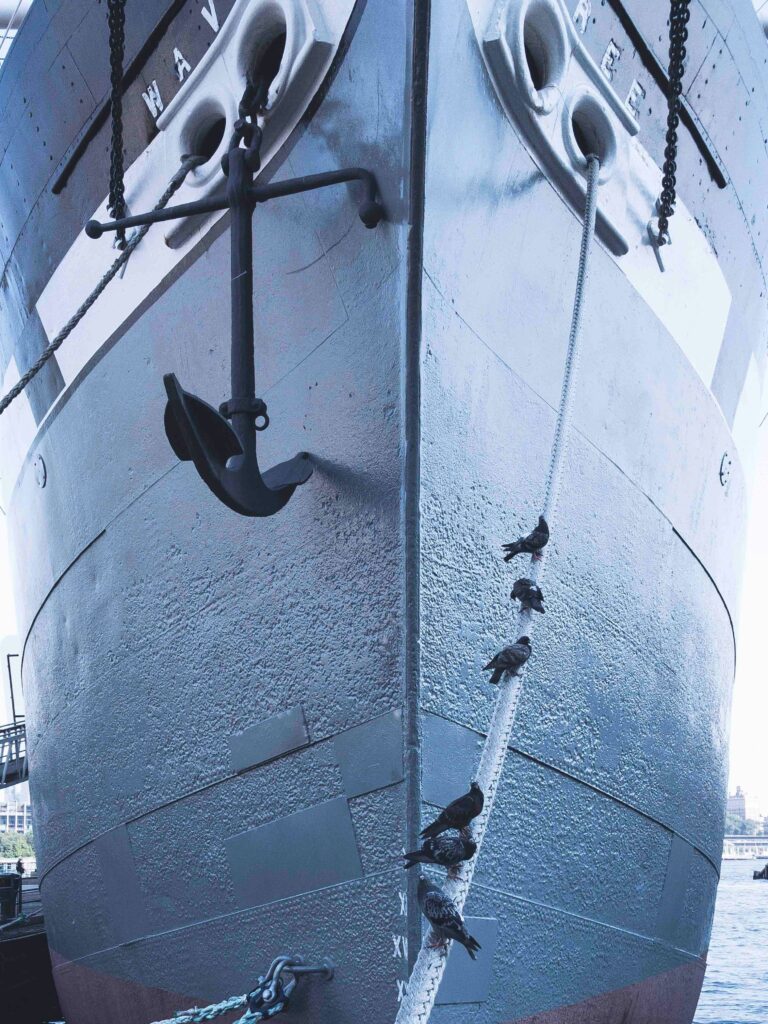
Photo by Simon Abrams on Unsplash
The famous line from the fight song of the United States Naval Academy refers to a simple nautical moment: when a ship’s anchor is lifted from the ocean floor and the vessel officially gets underway.
But here’s the interesting thing about anchors. Even when they’re lifted, they’re never left behind. The ship keeps the anchor onboard for the next port.
Brand names work much the same way.
Once an idea, perception, or association attaches itself to a brand, it tends to stick. That mental “anchor” can influence how people perceive value, quality, and meaning—sometimes for decades.
Understanding anchoring can help you build stronger brands and avoid naming decisions that might weigh you down later.
What Is Anchoring?
In psychology and behavioral economics, anchoring refers to the tendency for people to rely heavily on the first piece of information they encounter when making decisions.
That initial reference point—whether it’s a price, description, or name—shapes everything that follows.
Once the anchor is set, it becomes difficult to ignore.
Brands use this effect constantly.
Consider luxury goods. A handbag from Louis Vuitton might cost over $1,200, while a perfectly functional bag from Target sells for under $50. The difference isn’t just materials, it’s perception. The luxury brand establishes a powerful anchor of prestige, craftsmanship, and exclusivity.
The same effect appears with packaging. The iconic blue box from Tiffany & Co. immediately signals luxury and desirability before you even see what’s inside.
The anchor is already set.
Anchoring at Work in Pricing
Retailers also use anchoring to shape how customers interpret value.
For example, Costco once offered a massive 10-carat canary diamond ring with an appraised value of $264,765 for about $180,000. The dramatic price created a powerful reference point.
After seeing that number, suddenly a 1.3-carat ring priced around $1,800 feels like a bargain—even though, without that anchor, it might seem expensive.
The high-end product sets the benchmark that reframes everything else.
The Science Behind Anchoring
Anchoring isn’t just marketing theory. It has been demonstrated repeatedly in scientific studies.
In one famous experiment, researchers asked participants to write down the last two digits of their Social Security number before bidding on items such as wine, books, and electronics.
The numbers were random and unrelated to the products.
Yet participants with higher numbers (for example, 80–99) consistently placed higher bids than those with lower numbers (00–19). Most participants insisted the numbers had no influence on their bids.
But they clearly did.
Anchors work even when we don’t realize they’re influencing us.
Another study explored the impact of music in a wine shop. Over two months, researchers alternated between playing classical music and Top-40 hits.
When classical music played, shoppers purchased significantly more expensive wine.
Why?
Classical music subtly anchored shoppers to think about sophistication and premium products.
Anchoring in Brand Positioning
Anchors can also help brands define their competitive positioning.
A classic example is 7 Up, which famously branded itself as “The Uncola.”
Rather than trying to compete directly with cola giants, the brand highlighted what it wasn’t. The campaign subtly suggested that colas came with baggage—sugariness, heaviness, and artificial flavors.
7 Up anchored itself as the refreshing alternative.
Sometimes the best way to position a brand is by redefining the reference point.
When Brand Names Become Anchors
Names themselves can create long-lasting anchors.
When Bill Gates founded Microsoft, the name perfectly described the company’s mission: microcomputer software.
At the time, the name captured the emerging category.
But decades later, the term “microcomputer” feels like a relic of the 1970s. The name anchored the company to an era and technology that has long since evolved.
That doesn’t mean the name was wrong, but rather that naming decisions can carry unexpected long-term implications.
Turning Anchors Into Advantages
Sometimes entrepreneurs intentionally choose anchors that reinforce a brand’s philosophy.
When Richard Branson launched his first business, a record store, he and his partner named it Virgin because they were complete novices at running a company.
Critics were stunned when he kept the name for his airline.
After all, who wants to fly with someone who is a “virgin” at aviation?
But Branson understood the power of the anchor. For his audience, the name didn’t imply inexperience—it suggested a fresh approach and a willingness to challenge industry norms.
“Virgin” became shorthand for doing things differently.
The anchor worked exactly as intended.
Naming Lessons from Anchoring
Anchoring is one of the most powerful—and often invisible—forces in branding. Once established, it can influence perception for years or even generations.
When choosing a name, consider the anchors you may be creating:
- Category anchors: Are you tying your brand to a specific technology or moment in time?
- Value anchors: Does the name signal premium, affordability, or innovation?
- Positioning anchors: Does it frame how customers compare you to competitors?
The right anchor can reinforce your brand’s strengths and shape how customers perceive your value.
The wrong one can become a weight you carry indefinitely.
Like a ship leaving port, every brand eventually lifts its anchor and sets course. But remember: the anchor always stays onboard.
Choose it wisely.

"Better Branding Through Science"